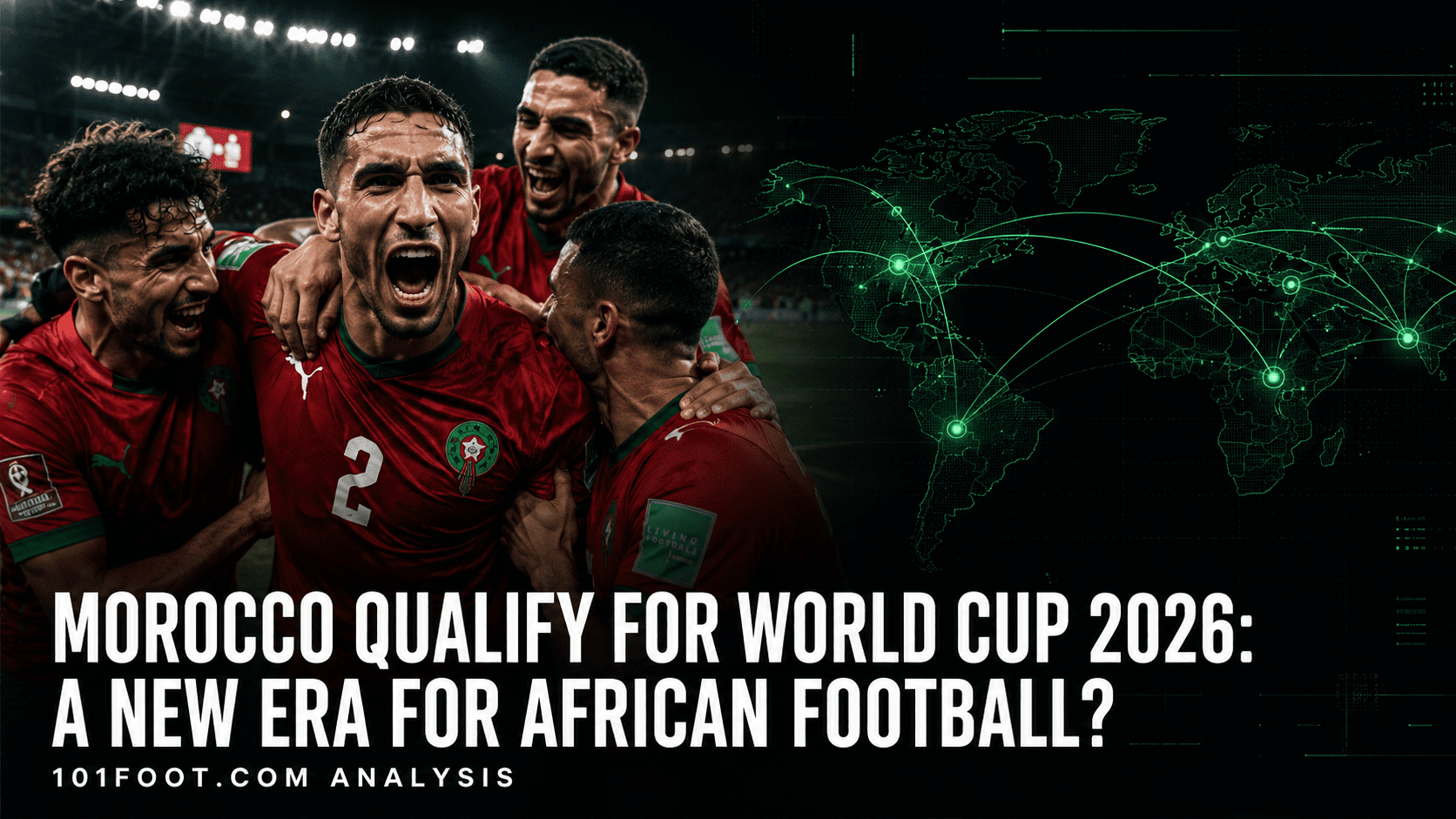
For the first time in the 96-year history of the FIFA World Cup, eight Arab nations will compete at the same tournament — Algeria, Egypt, Iraq, Jordan, Morocco, Qatar, Saudi Arabia, and Tunisia. It doubles the previous record of four, set in 2018 and equaled in 2022.

The Expanded Format: A Quiet Gift
The tournament expands from 32 to 48 teams across 12 groups of four. Under the new format, the Asian Football Confederation receives eight or nine slots instead of the previous 4.5, and the African confederation receives nine instead of five. The single most important structural change is that 32 of the 48 teams advance — including the eight best third-place finishers. A team can finish third in its group with four points, sometimes three, and still qualify for the knockout round.
That cushion is a quiet but significant advantage for mid-tier Arab sides whose realistic ceiling is one win and one draw. More slots meant more Arab qualifiers — but it does not, on its own, mean more Arab progress.
The Draw: All Eight Groups
“Morocco’s 2022 semi-final run remains the outlier, not the new normal. Reaching the last four required beating Belgium, Spain, and Portugal in succession.”
Team by Team: Realistic Prospects
Genuine Contender
Ranked 8th in the world with Hakimi, Bounou, and En-Nesyri intact from the 2022 squad that reached the semi-finals. The round of 16 is the floor; a quarter-final run is realistic. Brazil opens the group — second place is the logical path.
Dark Horse
Mohamed Salah is Africa’s all-time top scorer in World Cup qualifying. Second place comes down to Egypt vs Iran — two sides just eight places apart in the FIFA rankings. Lose to Iran and the campaign is over.
Hopeful
Opens against Argentina in game one. Their 2014 round of 16 run is the template, but Austria at #24 is considerably harder than the sides they overcame that year. Second place is possible if results go their way.
Seven World Cups, never past the group stage. Netherlands and Japan both rank above them. Third place is the realistic ceiling — which now survives under the new format.
Famous for shocking Argentina in 2022. Faces Spain, Uruguay, and Cape Verde. Beating Cape Verde and stealing one point elsewhere is the realistic target.
First qualification on merit. Two-time AFC Asian Cup champions. A result against Bosnia or Canada is plausible — but advancing requires beating a seeded side.
Iraq faces France, Senegal and Norway. Jordan makes its World Cup debut against Argentina. Competitive performances would be historic achievements in themselves.
What the Numbers Actually Say
Three conclusions emerge when rankings meet draws. First, the expanded format inflates participation more than achievement — six of the eight Arab teams are ranked outside the world’s top 40. Second, the round of 16 is a reasonable collective target: Morocco is the strong bet, Egypt and Algeria have plausible paths, while Tunisia, Saudi Arabia, and Qatar are live for best-third-place spots.
Third, and most critically, the 2022 semi-final was an outlier, not a new baseline. The story of 2026 is less about a breakthrough and more about a broadening base — eight teams on the world stage, gaining the experience that historically precedes a region’s biggest results.